We’ve all rolled our eyes at yet another AI-generated ad, scrolled past a beautifully empty visual on social media, or deleted that one email campaign that’s been following us like a bad habit. That, right there, is marketing fatigue, and it’s slowly killing brand trust in a way most teams don’t see coming.
What Exactly Is Marketing Fatigue?
So, what is considered fatigue in a digital marketing sense?
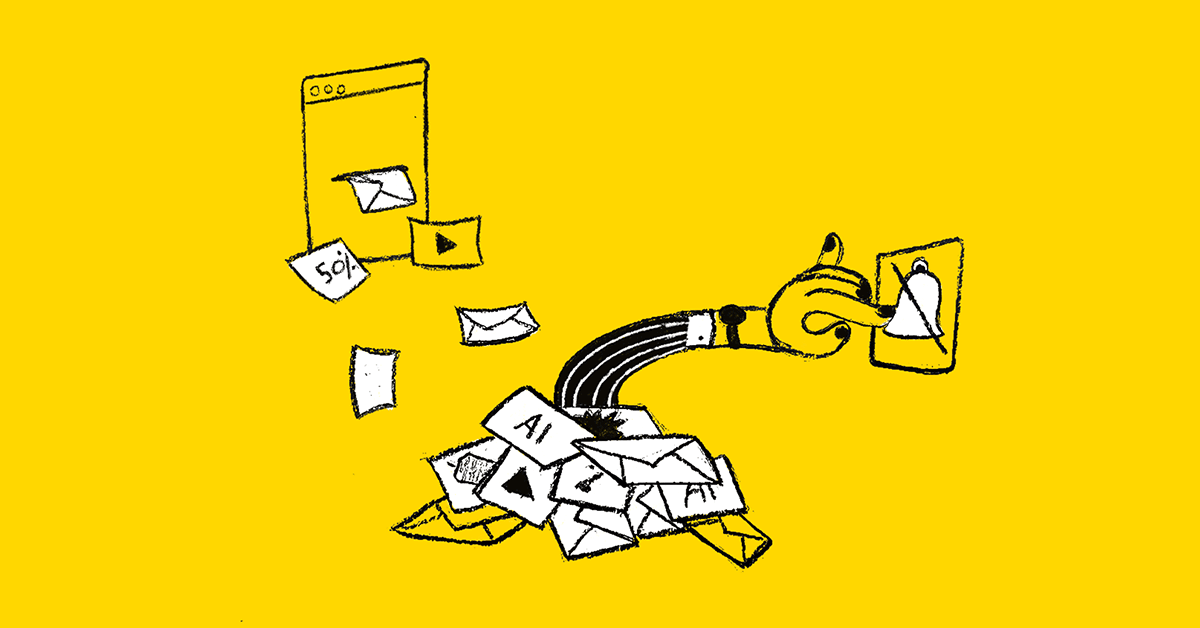
At its core, marketing fatigue happens when your audience becomes weary of your brand’s communications, leading to decreased engagement or, worse, complete disengagement. It is that moment when consumers mentally tune out, feeling overwhelmed by incessant messages, constant promotions, and repetitive content.
For instance, for many, it manifests as, “Another email? Another product drop?”—prompting them to stop paying attention altogether due to irrelevant, excessive, or poorly timed messaging.
In fact, a 2025 Optimove report revealed that 70% of consumers unsubscribed from at least three brands in the past three months due to overwhelming message volumes. This highlights the risks of overcommunication.
And with the rise of AI, that problem’s only grown louder.

The Rise of AI in Marketing and the Avalanche of Content
There’s no denying it: artificial intelligence has transformed marketing. For CMOs and CIOs alike, it’s become a top business priority. Our own team uses AI to scale content production, personalise messages, and work faster than ever. From blog posts and emails to generative visuals, AI in marketing has opened a new frontier.
But here’s the catch: not every use of AI adds value.
Without a clear strategy or creative direction, AI-generated content becomes repetitive. And when your consumers wade through an avalanche of emails, social posts, ads, and AI-generated visuals daily that feel like carbon copies, it leads to AI fatigue—a creative numbness caused by the flood of automated content lacking originality, story, or soul.
And while AI isn’t solely to blame, as it’s a tool, not a silver bullet, marketing expert Candace Gillhoolley explains, “AI fatigue in marketing happens when brands rely too heavily on AI, resulting in interactions that feel impersonal and mechanical” (LinkedIn).
Why Digital Marketing Fatigue is a Silent Brand Killer
1. Brand Dilution
A recent global study found that 97% of consumers now show signs of brand inertia. Communication in the age of AI has become so generic that people no longer feel emotionally connected to any brand. Even more alarming is that over half of those surveyed couldn’t name a single company they felt truly bonded with.
That’s a serious wake-up call. Because if your brand sounds like everyone else and you have no unique identity, why should your audience care? Or remember?
2. Audience Disengagement
Marketing fatigue doesn’t just dull your brand identity. It also kills your performance. When people feel overwhelmed, they tune out.
That leads to:
- Dropping email open rates
- Flatlined engagement, no matter how much content you post
- Plummeting click-through rates
- A growing sense of mistrust, because it all just feels like noise
And when brand trust fades, so does brand equity. And that’s not something a retargeting ad can fix.
Plus, this isn’t just theory—it’s happening. In India, 88% of customers say they’ve abandoned purchases because they felt overwhelmed by too many choices or constant ad bombardment. It’s a clear signal: when digital marketing becomes noise, customers walk away.


3. Trust Erosion Among Digital Natives
Gen Z and younger millennials may indeed embrace AI tools, but that doesn’t mean they trust brands that overuse them. That includes India’s millennial and Gen Z consumers, who increasingly tune out brand messages they perceive as lazy automation.
In fact, their trust is already slipping.
According to a 2024 survey, only 46% of consumers were comfortable with brands using AI in marketing, a steep drop from 57% just a year earlier. That’s a clear signal: consumers are growing cautious about how AI is used in brand experiences, and they are wary of AI’s potential to create potentially misleading brand experiences.

So, What’s the Way Forward? Here’s What We Recommend
1. Audit and Eliminate Content Clutter & Prioritise Message Clarity
Before creating more content, take stock of what already exists. Evaluate your messaging across platforms and ask:
- Is this message still relevant?
- Is it adding value or just filling space?
- Does it reflect our brand’s core voice?
Then, retire redundant campaigns and consolidate scattered narratives into a coherent storyline. Avoid overwhelming your audience with layered offers, jargon, or conflicting calls to action. Use a single clear takeaway per message or content piece.
2. Quality & > Volume
More content or offers aren’t better. Better content or offers are better. Not everything needs to be said. Prioritise fewer, sharper messages that mean something. Instead of 10 ad campaigns a month, try three with great offers. Even a single insightful blog post, viral video, or meme with a heart can spark more loyalty than 20 bland AI-generated images.

3. Time & Tailor Messages
Beat marketing fatigue and AI fatigue by respecting customer rhythms and needs. Send emails on optimal days, not weekends. Vary content cadence so people aren’t hit by five promos every Monday. Personalise where possible: segment audiences, customise messaging, and offer tailored solutions.

It’s Time to Recalibrate
Marketing fatigue may be the silent killer of brand trust, but it is not unavoidable. By following the tips outlined above, you can rebuild trust, declutter your brand messaging, and enhance brand recall.
In short, it might be time for a strategic reset if you want to cut through the noise without becoming part of it.