AI is today a content marketing powerhouse. In the time it takes you to finish your coffee, generative AI content creation tools like ChatGPT, Jasper, or Copy.ai can already draft a handful of email variations, brainstorm blog titles, and maybe even write a pretty decent tweet thread (with emojis!).
For brands and marketing teams under pressure to do more with less, these tools feel like an always-on assistant that never needs caffeine or PTO.
But here’s the thing: for all its speed and smarts, does AI-generated content make you feel something? Does it actually connect with you?
Sure, most AI content is…fine. But is “fine” good enough to earn attention in a content-saturated world?
This article explores why human writers still matter in an AI-powered world and how content gets truly powerful when we combine machine intelligence with human insight.
What AI Is Great At (And Why We Use It Too)
Let’s give credit where it’s due: AI is pulling some serious weight in content marketing, and it’s doing it fairly well.
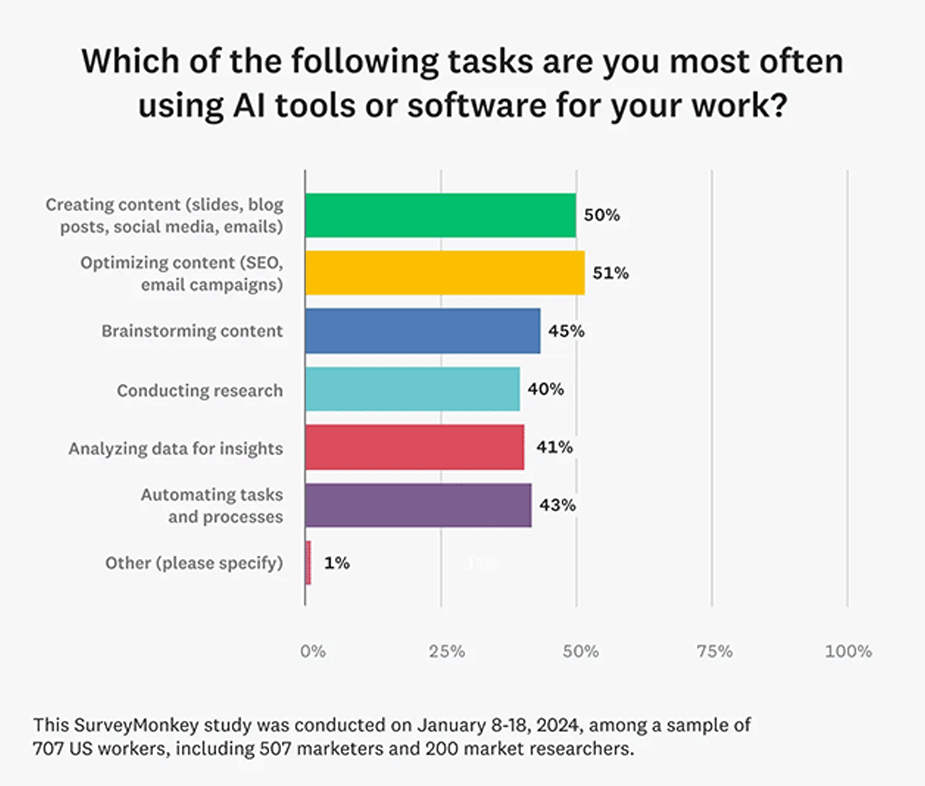
In fact, the adoption of AI in content marketing has surged in recent years. A report by the Content Marketing Institute reveals that 87% of marketers use generative AI tools for various content-related tasks. And that number will only go up.
Why?
Because AI can sift through mountains of data quickly, automate grunt work, and churn out content faster than any human team possibly could.
But that is not all.
One of the primary advantages of using generative AI tools in content creation is that they can optimize content for SEO (search engine optimisation) and AEO (answer engine optimisation), craft hyper personalized content, A/B test headlines, segment your audience, and analyze user behavior. They don’t get tired. They don’t get writer’s block. They don’t ghost your deadline.
And let’s not ignore the cost savings. Brands like Klarna are reportedly saving $10 million a year thanks to GenAI tools for marketing campaigns and image generation. As Klarna’s CMO David Sandström put it:
“Traditionally, it would have been very costly to cater to these occasions with bespoke imagery, but with AI that is no longer an issue.”
In short, these AI tools free up valuable time and mental energy, allowing marketers to focus on higher-level content strategies.
But here’s the catch—
(and it’s a big one…)
What AI Can’t Do (And Why Human Writers Still Matter in Content Marketing)
For all its advantages, AI has one major flaw. It can write and mimic the tone or style you want, but it doesn’t know what it’s writing or how to mean something. It has no lived experience or intuition. It struggles with cultural nuance, context, and subtext. It can’t even sense irony, read the room, or tap into the emotional undercurrent of a trending moment. And when it tries, it often gets it painfully wrong.
For example, Microsoft recently published an AI-generated travel guide that listed the Ottawa Food Bank as a top tourist attraction and said, “Consider going into it on an empty stomach.” This line made painfully clear how far AI-generated content is from understanding contextual appropriateness.
And people notice. There’s often something slightly “off” about AI-generated content, and audiences can sense it. In fact, 50% of consumers say they can tell when content has been written by AI. The tone, timing, or phrasing may be close, but not close enough.
And that’s a problem—because great content isn’t just about what’s said. It’s about how it lands. It’s about knowing when to push a boundary, when to hold back, and when to break the rules entirely because the moment calls for it.
That kind of judgment doesn’t come from training on terabytes of data. It comes from being human.
Human writers bring intuition, lived experiences, creativity, empathy, wit, and wisdom to their work—things no algorithm can fully replicate. They can craft brand narratives that feel real, interpret nuance, sense cultural shifts, and understand emotional storytelling. They can even sense when a message is off.
Plus, human writers know how to pull on a reader’s curiosity, and how to land a punchline or a gut-punch, depending on what the moment calls for.
The Future Is Not Either/Or. It’s Both.
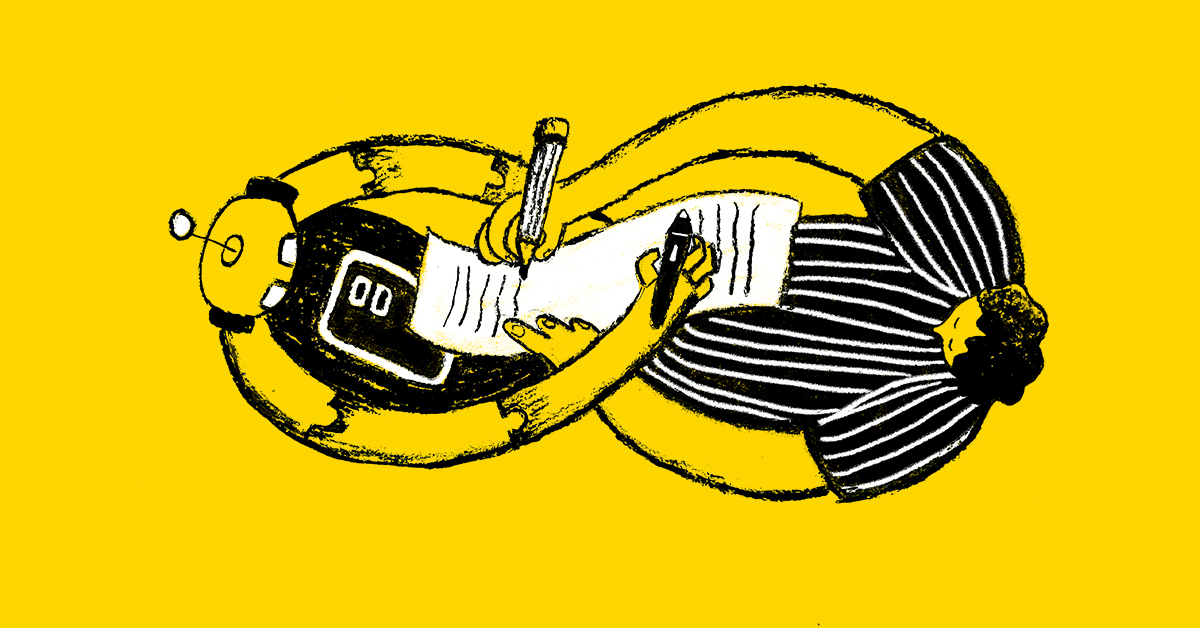
The future of content marketing isn’t a tug-of-war between humans and AI. It’s a creative partnership between both. It’s about knowing what each does best and combining them to create more powerful, meaningful content.
For example, AI excels at processing structured data and generating straightforward content, like “things to do” lists, weather updates, or local traffic alerts. It’s also great at outlining, summarising, producing first drafts, and speeding up research-heavy tasks. Media companies like the Daily Mirror and The Express are already experimenting with AI for this kind of work. But even then, the content isn’t fully autonomous. As Reach CEO Jim Mullen put it:
“It was all AI-produced but the data was obviously put together by a journalist, and whether it was good enough to publish was decided by an editor.”
Because while AI can help create faster, the human touch remains essential. And that’s exactly what the future should look like: let AI handle the grunt work that doesn’t need full creative attention. But leave the judgment calls, storytelling, brand tone, and emotional insight to people. Because that’s the part that actually moves audiences.
If you’re a brand, agency, or creative team that needs to do more with less, this partnership matters. Especially if you want efficiency, but not if it means sacrificing quality, creativity, or your distinct voice.
At Helveticans, we’re not scared of AI. We build with it. We collaborate with it. We even joke with it sometimes (its puns are terrible). But we never let it replace the human touch behind a piece of content. That’s how we build content that performs and feels personal.
In short, this isn’t about resisting AI. It’s about reclaiming the human role in content marketing. Let AI handle the drab, the mundane—the parts that don’t need human ingenuity. Let it help you create faster, brainstorm smarter, and automate what doesn’t need your full creative attention.
But, when it’s time to make your audience feel something? When it’s time to tell a story, build trust, or spark a shift in thinking?
That’s still a human writer’s job.